

Why Breathwork Is the Next Big Thing in Mind-Body Wellness
Wellness trends come and go, green juices, cold plunges, 12-step skincare routines, but every so often, something emerges that isn’t new at all. It’s foundational.
Breathwork is one of those practices.
What’s different now is not the breathing itself. It’s the growing awareness that how we breathe directly shapes how we feel, think, sleep, and function. In a world where stress has become chronic and burnout feels normal; people are realizing that regulating the nervous system is the real gamechanger. And the fastest way to influence the nervous system? The breath.
What Is Breathwork and How Does It Work?
Breathwork is the intentional manipulation of the breath to shift your biological state. Think of it as a remote control for your nervous system. While breathing is automatic, breathwork makes it conscious.
Common Breathwork Techniques for Beginners
- Slow Diaphragmatic Breathing: Deep “belly breathing” to engage the lower lungs.
- Box Breathing: A symmetrical pattern (4s inhale, 4s hold, 4s exhale, 4s hold) used for composure under pressure.
- Coherent Breathing: Pacing your breath to exactly 5 seconds in and 5 seconds out to synchronize heart and breath rhythms.
- Extended Exhale Breathing: Making the exhale longer than the inhale to trigger immediate relaxation.
The Connection Between Breath and the Brain
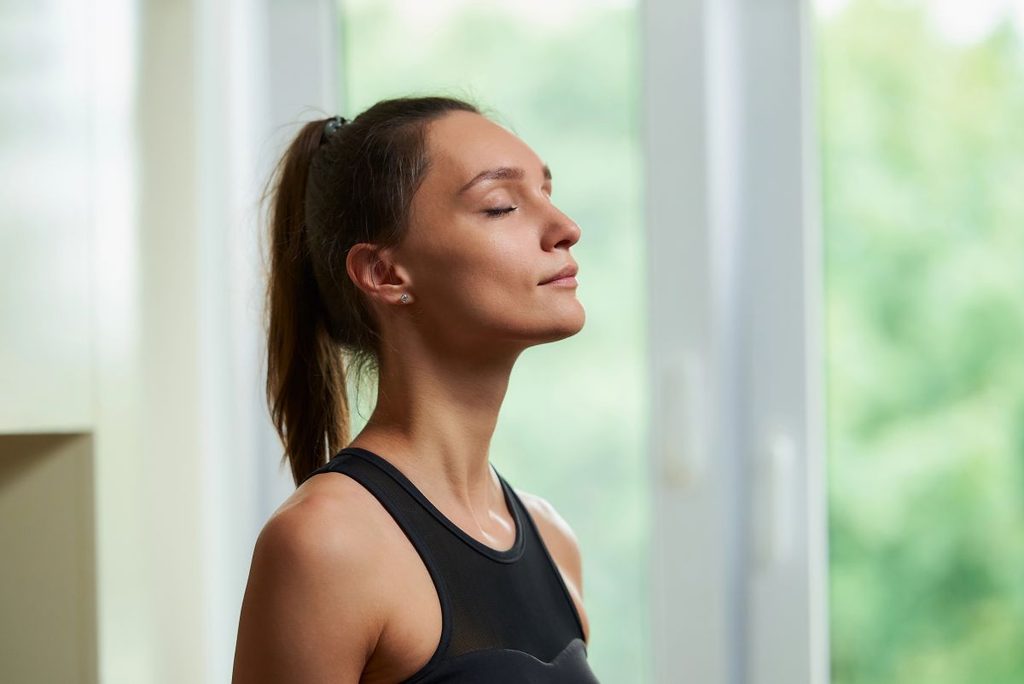
Some practices are calming, others are energizing. The unifying principle is simple: breath is the bridge between body and mind. Breathwork pioneer Dan Brulé, author of Just Breathe, teaches that when you regulate your breathing, you can shift your state of well-being. By changing the rhythm of your intake, you change the message being sent to your brain.
Why Breathwork Is Trending: The Shift to Nervous System Regulation
Beyond Self-Care: Why Regulation Matters
The conversation is shifting from bubble baths to nervous system regulation. Breathwork gives you agency. It’s not about escaping stress; it’s about expanding your capacity to handle it, a concept I explored during my Gentle Spring Reset.
The Science of the Vagus Nerve and Stress Relief
Controlled breathing directly stimulates the Vagus Nerve. By consciously slowing the breath, you send a biological signal to your brain that you are safe, effectively “hacking” your stress response and increasing Heart Rate Variability (HRV).
A systematic review of slow-breathing research found that breathing at fewer than 10 breaths per minute increases heart rate variability and is linked to greater relaxation and less anxiety in healthy adults.
The “Glow” Benefits of a Consistent Breathwork Practice
True radiance isn’t just topical. When practiced consistently, breathwork supports the pillars of a Fit and Glowing lifestyle:
- Improving Sleep and Mental Clarity: Calming the mind before bed for deeper repair and sharper focus the next morning.
- Physical Radiance Through Lower Cortisol: Reducing systemic inflammation and improving circulation, which allows your natural skin health to shine.
A Simple 3-Minute Breathwork Practice to Try Today
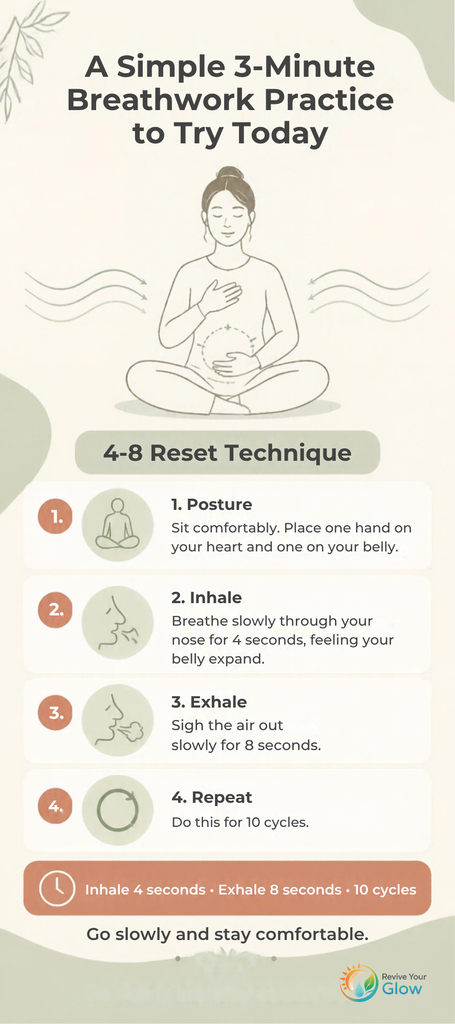
The 4-8 Reset Technique
If you’re new to breathwork, try this Extended Exhale technique to ground yourself:
- Posture: Sit comfortably. Place one hand on your heart and one on your belly.
- Inhale: Breathe slowly through your nose for 4 seconds, feeling your belly expand.
- Exhale: Sigh the air out slowly for 8 seconds.
- Repeat: Do this for 10 cycles.
Research backs this up: in a randomized controlled trial published in Cell Reports Medicine, five minutes a day of exhale-focused breathing improved mood and lowered respiratory rate more than mindfulness meditation over one month.
Is Breathwork Safe for Everyone?
Most gentle practices are safe for everyone. However, intense techniques may not be appropriate for those with certain cardiovascular conditions or pregnancy. As I learned during my own recovery journey, it is always best to start simple and consult a professional if you have underlying health concerns.
Start simple. Go slowly. Consistency matters more than intensity.