

If you’ve been feeling constantly “on edge,” exhausted, or emotionally reactive even when nothing obvious is wrong, you’re not alone. Many people today are living in a chronic state of survival mode. The good news is that your body isn’t broken, it’s adaptive. And with the right tools, you can train your nervous system to shift out of stress and into a state of safety, clarity, and resilience.
This expanded guide will help you understand what’s happening beneath the surface and give you practical, science-backed nervous system regulation strategies you can use in real life.
Your Regulation Roadmap
What Is “Survival Mode,” Really?
Your nervous system is designed to detect and respond to threats automatically. This process is controlled by the autonomic nervous system (ANS), which operates below conscious awareness.
It has two primary branches:
- Sympathetic nervous system (SNS) → activates “fight or flight”
- Parasympathetic nervous system (PNS) → promotes “rest and digest”
When your brain perceives danger (real or perceived), it triggers a cascade of stress hormones like cortisol and adrenaline. Your body prepares for action:
- Heart rate increases
- Breathing becomes shallow and rapid
- Muscles tense
- Digestion slows
This is a short-term survival response. The problem arises when this state becomes chronic when your system never fully powers down.
Over time, even non-threatening situations (emails, social interactions, daily responsibilities) can keep your system activated. That’s when survival mode becomes your baseline.
For a clinical overview of how stress affects the body, see this resource from the Cleveland Clinic.
Beyond Fight-or-Flight: Understanding Freeze and Shutdown
Many people think stress only looks like anxiety or panic, but there’s another side: shutdown.
When stress becomes overwhelming or prolonged, your nervous system may shift into a freeze response, sometimes called dorsal vagal shutdown. This can feel like:
- Emotional numbness
- Low motivation
- Brain fog
- Disconnection from yourself or others
- Chronic fatigue
This isn’t laziness, it’s your body conserving energy and protecting you from overload.
Understanding this is critical, because different states require different regulation strategies. Someone with high anxiety needs calming techniques, while someone in shutdown needs gentle activation.
Signs Your Nervous System Is Dysregulated
Nervous system dysregulation can show up in subtle but persistent ways:

Physical Symptoms
- Tight shoulders or jaw
- Headaches or migraines
- Digestive issues (bloating, IBS-like symptoms)
- Rapid heartbeat or chest tightness
Emotional Symptoms
- Irritability or mood swings
- Feeling overwhelmed easily
- Difficulty relaxing
Cognitive Symptoms
- Racing thoughts
- Trouble concentrating
- Forgetfulness
Behavioral Patterns
- Procrastination
- Overworking or burnout cycles
- Avoidance or withdrawal
For some people, a dysregulated nervous system shows up as avoiding exercise out of fear, even when they know movement would help.
These are not random; they are signals from your body that it doesn’t feel safe or balanced.
For a deeper understanding of how chronic stress shapes long‑term cognitive resilience, explore our Essential Guide to Brain Longevity.
The Science of Regulation: Why the Body Comes First
A key concept in nervous system work is this:
Regulation is physiological before it is psychological.
You can’t simply “mindset” your way out of chronic stress because your brain is responding to signals from your body.
This is why top-down approaches (like positive thinking) often fall short on their own. You need bottom-up strategies techniques that work directly with the body.
Harvard Health explains how breath and physical relaxation techniques influence the stress response.
The Nervous System Ladder (A Simple Way to Understand Your State)
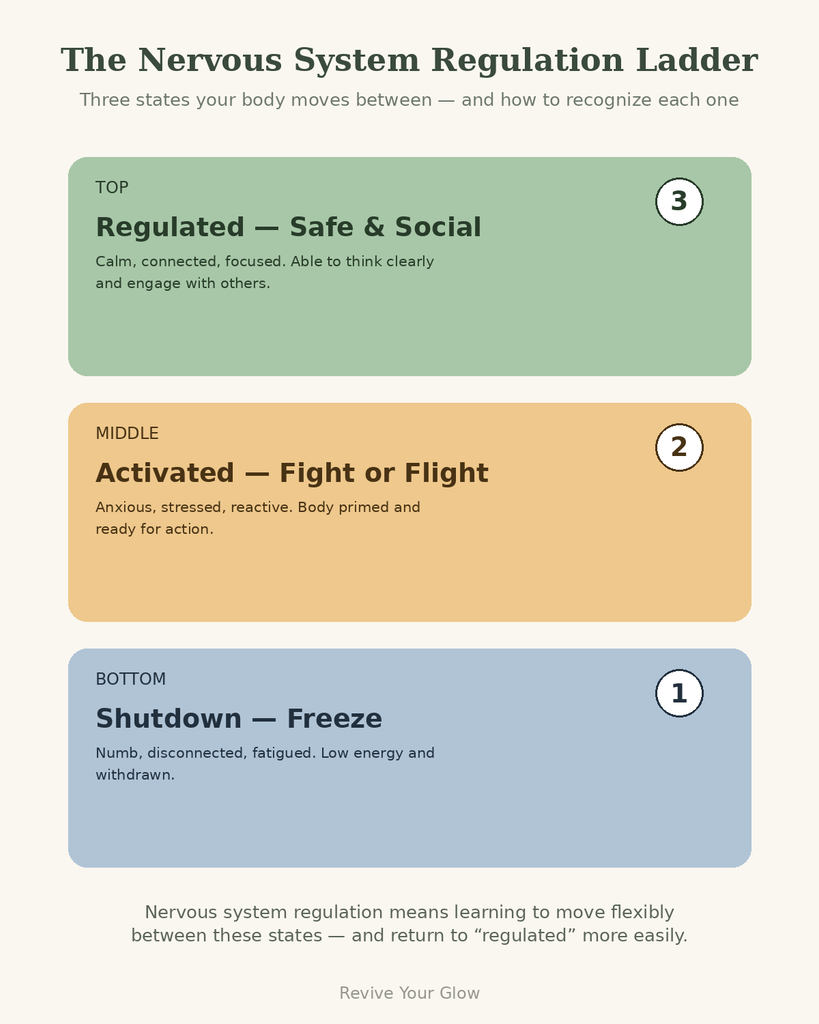
Think of your nervous system like a ladder with three main levels:
1. Top: Regulated (Safe & Social)
- Calm, connected, focused
- Able to think clearly and engage with others
2. Middle: Activated (Fight or Flight)
- Anxious, stressed, reactive
- Ready for action
3. Bottom: Shutdown (Freeze)
- Numb, disconnected, fatigued
- Low energy, withdrawn
Your goal isn’t to stay at the top 24/7, it’s to move flexibly between states and return to regulations more easily.
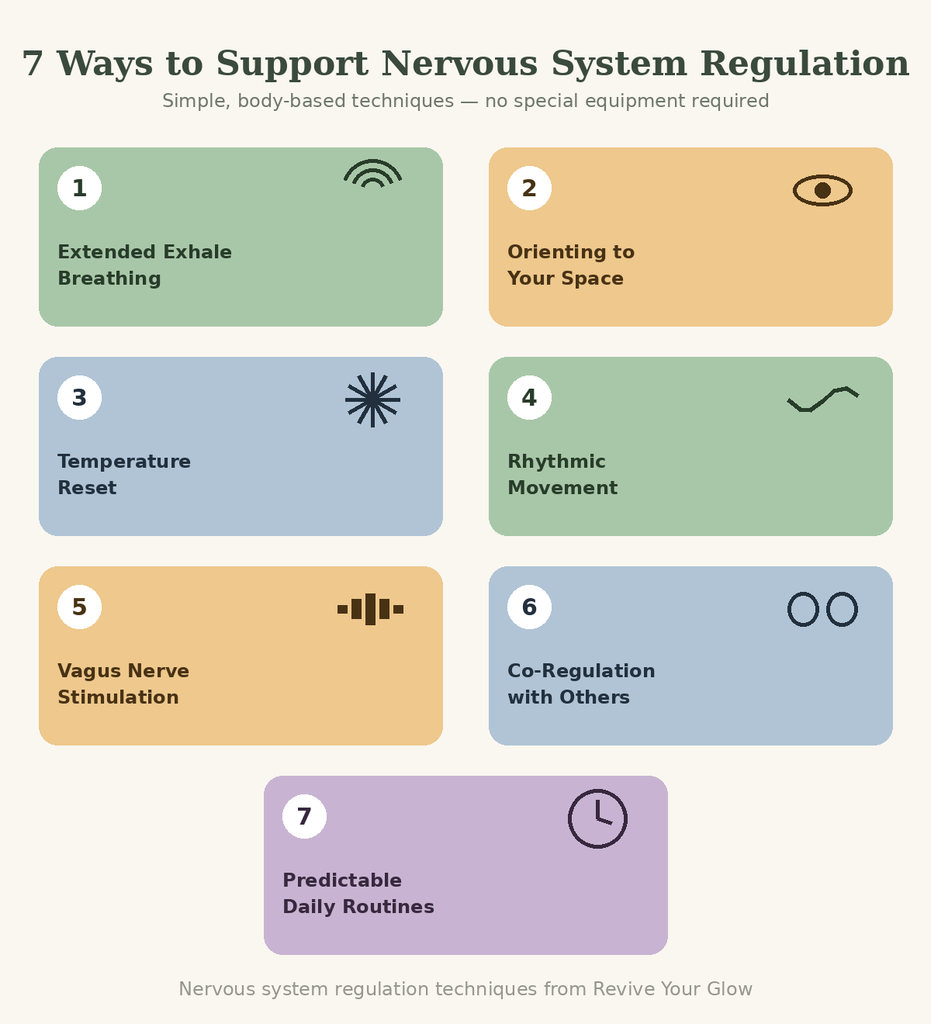
7 Practical Ways to Support Nervous System Regulation
1. Extended Exhale Breathing
Your breath is a direct lever into your nervous system.
Try:
- Inhale for 4 seconds
- Exhale for 6–8 seconds
Longer exhales stimulate the vagus nerve and activate relaxation.
Pro tip: Place one hand on your chest and one on your belly. Focus on expanding your belly as you breathe to engage deeper diaphragmatic breathing.
2. Orienting: Signal Safety Through Awareness
Pause and gently look around your environment.
Ask yourself:
- “Where am I right now?”
- “What feels safe or neutral?”
This practice helps your brain recognize that you are not in immediate danger.
3. Temperature Reset
Cold exposure can quickly shift your state:
- Splash cold water on your face
- Hold an ice pack briefly
- Step outside in cool air
This activates the “dive reflex,” which slows heart rate and calms the body.
4. Rhythmic Movement
The nervous system responds strongly to rhythm.
Try:
- Walking at a steady pace
- Rocking gently
- Light dancing
This helps discharge excess stress energy and restore balance.
5. Vagus Nerve Stimulation
Stimulate the vagus nerve through simple actions:
- Humming or chanting
- Singing along to music
- Gargling water
These vibrations activate pathways linked to calm and regulation.
6. Co-Regulation (Calm Through Connection)
You don’t have to regulate alone.
Support your system by:
- Talking to a trusted friend
- Spending time with calming people
- Making eye contact and sharing presence
Your nervous system naturally syncs with others; it’s built for connection.
7. Create Predictable Routines
Your brain loves predictability.
Simple routines like:
- Morning rituals
- Regular mealtimes
- Consistent sleep schedules
help reduce uncertainty and signal safety to your system.
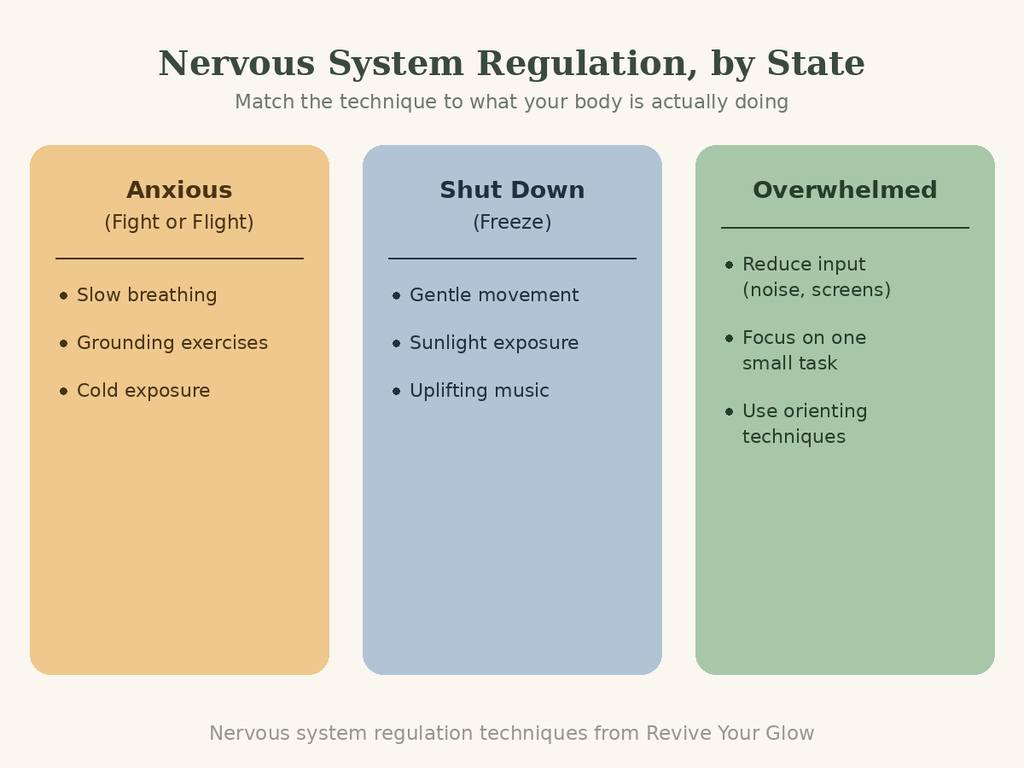
Regulation Based on Your State
If You Feel Anxious (Fight or Flight):
- Slow breathing
- Grounding exercises
- Cold exposure
If You Feel Shut Down (Freeze):
- Gentle movement
- Sunlight exposure
- Uplifting music
If You Feel Overwhelmed:
- Reduce input (noise, screens)
- Focus on one small task
- Use orienting techniques
This targeted approach makes regulation more effective.
Common Mistakes That Keep You Stuck
Many people unintentionally reinforce dysregulation. Watch for:
- Overconsuming caffeine → keeps your system wired
- Constant screen exposure → overstimulates your brain
- Ignoring rest signals → leads to burnout
- All-or-nothing habits → inconsistency prevents progress
Instead, aim for small, repeatable actions.
How Long Does It Take to Feel Regulated?
This depends on your baseline stress level and consistency.
- Short-term relief: minutes to hours
- Noticeable improvement: 1–2 weeks of daily practice
- Long-term regulation: ongoing lifestyle integration
Think of it like training a muscle, the more you practice, the more natural it becomes.
A Simple Daily Nervous System Reset Routine
Here’s a practical structure you can follow:
Morning (2–5 minutes):
- Slow breathing
- Gentle stretching
Midday (5–10 minutes):
- Walk outside
- Brief grounding exercise
Evening (10 minutes):
- Limit screens
- Deep breathing or humming
- Calm, predictable wind-down routine
Want the full sequence? Here’s how to build a restorative night routine.
This creates multiple “reset points” throughout your day.
FAQ
How long does nervous system regulation take to work?
It depends on your baseline and consistency. Short-term relief (like a few slow breaths or a cold splash) can shift your state within minutes. Noticeable improvement usually takes 1–2 weeks of daily practice, and lasting regulation comes from ongoing lifestyle habits, not a single technique used once.
Can you regulate your nervous system on your own, or do you need a therapist?
Many bottom-up techniques — breathwork, movement, temperature changes, co-regulation with others can be practiced on your own and are effective for everyday stress. However, if dysregulation stems from trauma, chronic anxiety, or shows up as persistent shutdown, working with a trauma-informed therapist can help you address root causes alongside these tools.
What’s the difference between being stressed and being dysregulated?
Stress is a normal, temporary response to a specific trigger that resolves once the trigger passes. Nervous system dysregulation is when your system gets stuck “on” (or shut down) even without an active threat it becomes your baseline rather than a passing state, showing up as chronic fatigue, irritability, or brain fog.
Is nervous system regulation the same as relaxation?
Not quite. Relaxation is one possible outcome of regulation, but true regulation means being able to move flexibly between states — calm, activated, and shutdown and return to a regulated baseline more easily. Sometimes regulation looks like gentle activation (for someone in freeze) rather than relaxation.
Final Thought: Regulation Is a Skill, Not a Trait
If you’ve been stuck in survival mode, it doesn’t mean something is wrong with you, it means your body has been doing its job a little too well.
The goal isn’t to eliminate stress completely. It’s to build the capacity to move through stress and return to safety more efficiently.
With consistent practice, your baseline will shift. You’ll feel calmer, think clearer, and respond to life with more intention instead of reaction.