


How to Regulate Your Nervous System Through the Body When Your Mind Can’t Calm Down
In a world that rarely slows down, stress and anxiety have become almost unavoidable. Many people try to manage overwhelm by “thinking their way out of it,” positive affirmations, logic, reframing thoughts, or pushing through discomfort. Yet when stress feels intense, chronic, or sudden, these mental strategies often fall short.
That’s because stress doesn’t start in the mind. It starts in the nervous system.
This is where somatic grounding techniques come in. Instead of trying to fix anxiety from the top down, somatic practices work from the body up, helping your nervous system feel safe again, often faster and more gentle than cognitive approaches alone.
In this article, you’ll learn what somatic grounding is, why it works so effectively for stress and anxiety, and how to use simple, science‑backed techniques to regulate your nervous system during moments of overwhelm.
Table of Contents
What Is Somatic Grounding?
The word somatic comes from the Greek word soma, meaning body. Somatic grounding refers to practices that bring your awareness into your physical body to stabilize your nervous system and anchor you in the present moment.
Unlike mindfulness practices that focus primarily on thoughts or emotions, somatic grounding emphasizes:
- Physical sensation
- Movement
- Breath
- Muscle engagement
- Sensory input
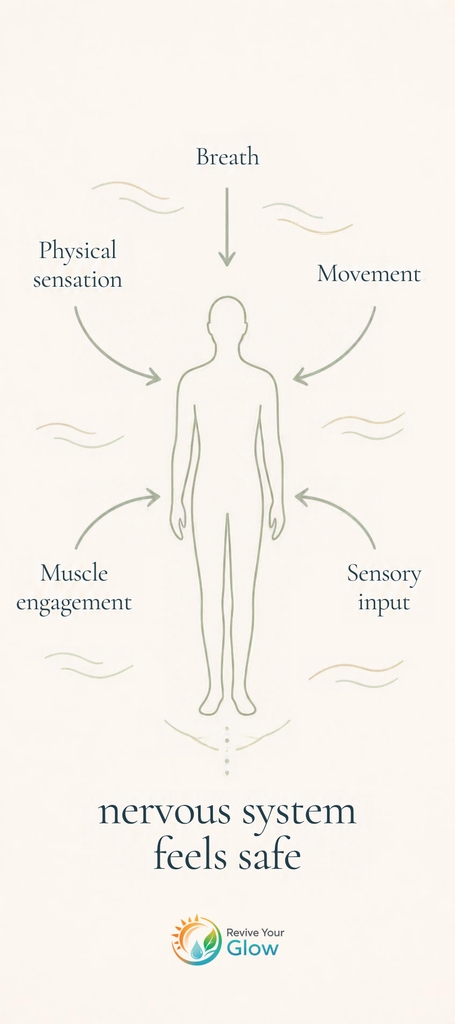
The goal is not to “calm down” forcefully, but to signal safety to your nervous system so it can naturally shift out of stress.
Why Stress and Anxiety Live in the Body
When you experience stress, anxiety, or overwhelm, your nervous system often enters sympathetic activation, commonly known as fight‑or‑flight. This state is designed to protect you from danger, but in modern life it’s frequently triggered by:
- Work pressure
- Emotional conflict
- Overstimulation
- Trauma reminders
- Constant digital input
Once activated, your body responds automatically:
- Muscles tighten
- Breathing becomes shallow
- Heart rate increases
- Digestion slows
- Thoughts race
This is known as the stress response: your body releases hormones that raise your heart rate and blood pressure.
At this point, trying to “think positively” can feel impossible because your nervous system believes something is wrong right now.
Somatic grounding works because it communicates directly with the nervous system bypassing mental resistance and restoring regulation through sensation and movement.
The Science Behind Somatic Grounding
Slow, controlled breathing, one of the best-studied body-based techniques, increases parasympathetic control of the heart, according to a meta-analysis. The vagus nerve is the main nerve of the parasympathetic system, which supports rest and recovery.
When the body receives cues like pressure, slow movement, rhythmic breathing, or sensory input, the brain may update its assessment of safety. Over time, body-based practices may help:
- Lower cortisol, a stress hormone (a meta-analysis of 58 studies found relaxation and mindfulness-based approaches can reduce it)
- Support emotional regulation (research links body awareness to emotion regulation)
- Reduce anxiety symptoms (a meta-analysis of breathwork trials found a small-to-moderate reduction compared with controls)
- Rebuild trust in bodily signals
This is why somatic practices are widely used in trauma‑informed therapy, nervous system regulation work, and neurowellness approaches.
Signs You Need Somatic Grounding (Not More Mindset Work)
You may benefit from somatic grounding if you experience:
- Anxiety that feels physical (tight chest, knot in stomach, shaking)
- Racing thoughts that won’t slow down
- Feeling “spaced out” or disconnected
- Emotional overwhelm with no clear cause
- Difficulty calming down even when you know you’re safe
If your stress feels stuck in your body, your body is where healing begins.
9 Powerful Somatic Grounding Techniques You Can Use Anywhere
These techniques are intentionally simple. You don’t need special equipment, long routines, or perfect conditions, just a willingness to tune into your body.
1. Feet‑to‑Floor Grounding

This foundational technique anchors your awareness through physical contact with the earth.
How to do it:
- Sit or stand with both feet flat on the floor
- Press your feet gently downward
- Notice the texture, temperature, and pressure
- Name silently: “I am supported.”
This sends immediate stabilizing input to your nervous system and is especially helpful during anxiety spikes.
2. Orienting to Your Environment
When stress hits, the nervous system narrows focus. Orienting widens it again.
Try this:
- Slowly look around the room
- Name 5 things you can see
- Notice 3 sounds
- Identify 1 pleasant or neutral sensation
This practice reminds your brain that you are here, now, and safe.
3. Hand‑to‑Chest or Hand‑to‑Belly Contact
Gentle self‑touch activates soothing pathways in the brain.
How to practice:
- Place one hand on your chest or belly
- Apply light, steady pressure
- Breathe slowly for 30–60 seconds
This can lower heart rate and calm emotional intensity quickly.
4. Muscle Tensing and Releasing
Stress often traps energy in the muscles. This technique, known as progressive muscle relaxation, helps release it.
Steps:
- Tense one muscle group (like fists or shoulders) for 5 seconds
- Release fully
- Pause and notice the sensation
- Move to another area
This gives your nervous system a sense of completion and relief.
5. Slow, Extended Exhale Breathing
Longer exhales help activate the parasympathetic nervous system.
Simple pattern:
- Inhale through your nose for 4 seconds
- Exhale slowly through your mouth for 6–8 seconds
- Repeat for 1–3 minutes
You don’t need to breathe deeply, just slowly.
A systematic review of slow-breathing research found links to greater heart rate variability and reduced anxiety symptoms.
6. Gentle Rocking or Swaying
Rhythmic movement is deeply regulating for the nervous system.
You can:
- Rock side to side while standing
- Gently sway while seated
- Move slowly in a figure‑eight motion
This mimics soothing movements used instinctively by the body.
7. Temperature Grounding
Temperature is a powerful sensory signal.
Options include:
- Holding a warm mug
- Splashing cool water on your wrists
- Using a cold compress briefly on the face
Choose warmth or coolness based on what feels calming to you.

8. Sensory Anchors
Strong sensory input can interrupt anxious spirals.
Examples:
- Smelling essential oils
- Holding a textured object
- Listening to low, steady music
- Chewing something crunchy
These inputs anchor attention in the body instead of the mind.
9. Weight and Pressure Grounding
Pressure increases feelings of safety and containment.
You might:
- Wrap yourself in a blanket
- Hug a pillow
- Sit with a weighted object on your lap
This technique is especially effective for nighttime anxiety or emotional overwhelm. If nighttime is when it hits hardest, here are habits for settling your nervous system before sleep.
How to Build Somatic Grounding Into Daily Life
Somatic grounding works best when practiced before stress becomes overwhelming.
Try integrating it into:
- Morning routines
- Transitions between tasks
- Work breaks
- Before sleep
- After emotional conversations
Even 30–60 seconds at a time can retrain your nervous system toward regulation.
Somatic Grounding vs. Traditional Stress Management
Traditional stress management often focuses on:
- Productivity
- Mindset shifts
- Problem‑solving
Somatic grounding focuses on:
- Safety
- Sensation
- Regulation
Both are valuable, but when your nervous system is activated, regulation comes first.
Final Thoughts: Healing Stress Through the Body
You are not broken for feeling overwhelmed. Your nervous system is doing its best to protect you.
Somatic grounding techniques offer a compassionate, body‑based way to restore balance without forcing calm or bypassing emotions. Over time, these practices help you build resilience, emotional safety, and trust in your body’s wisdom.
Grounding techniques are a helpful complement to, not a replacement for, professional care if anxiety feels persistent or overwhelming.