


Movement is supposed to feel good. That’s the “wellness” narrative, right?
“Just move your body.”
“Exercise is the best medicine.”
“You’ll feel better once you get moving.”
But if you’ve lived through burnout, trauma, chronic stress, or a major medical event, you know a different truth: Sometimes movement doesn’t feel freeing, it feels threatening.
If you find yourself resisting the gym or even a simple walk, it doesn’t mean you’re weak, unmotivated, or “not trying hard enough.” It means your nervous system is doing exactly what it was designed to do: protect you.
This is the conversation most fitness experts skip. But here, we lead with the truth.
In this article, we’ll explore why movement can feel unsafe after prolonged stress or trauma and how to gently rebuild a sense of safety in your body before you try to rebuild strength.
TL;DR: Why Movement Feels Unsafe (The Fast Facts)
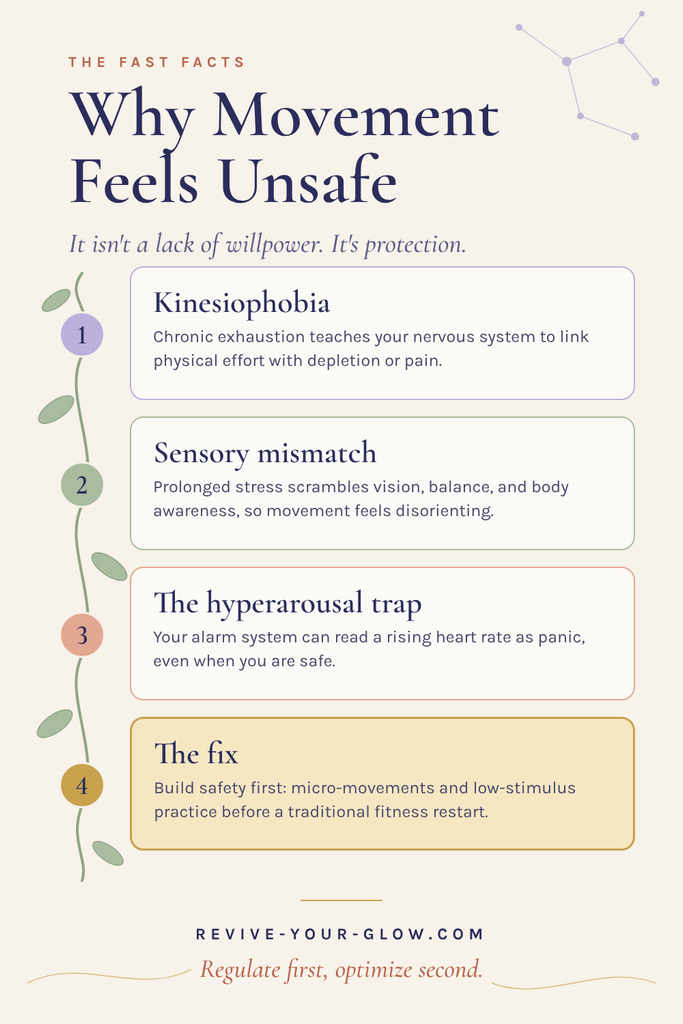
If your body resists exercise after trauma or severe burnout, it isn’t a lack of willpower—it is a physiological survival mechanism.
- Kinesiophobia: Chronic exhaustion triggers an implicit fear of movement because your nervous system associates physical exertion with past depletion or pain.
- Sensory Mismatch: Prolonged stress desynchronizes your internal tracking systems (vision, balance, and body awareness), making physical activity feel disorienting or threatening.
- The Hyperarousal Trap: Your brain’s alarm system (the amygdala) mistakes an exercise-induced high heart rate for an oncoming panic attack. Even if you logically know you’re safe, your body may still react as if something is wrong, which is why a workout can trigger panic symptoms even when you feel “fine” on the surface.
- The Fix: Healing requires shifting from “pushing through” to building somatic safety via micro-movements and low-stimulus exercises before attempting a traditional fitness restart.
Explore the Topics
When Your Body Has Been Through Too Much
After surviving a sudden cardiac arrest and undergoing Automatic Implantable Cardioverter-Defibrillator(AICD) surgery, I expected to feel grateful and ready to rebuild. Instead, I felt paralyzed by a new kind of fear.
I was scared to lift my arm. Scared to stretch too far. Scared to breathe too deeply. I was scared to trust the very body that had “failed” me on the basketball court.
That fear wasn’t dramatic, it was intelligent.
When your system has been overwhelmed, it learns to associate physical exertion with danger. It’s not a logical choice; it’s a biological imperative. Your nervous system remembers what your mind tries to forget.
In clinical terms, this subconscious resistance is often recognized as kinesiophobia—an intense, protective fear of physical movement born from the body’s desire to shield itself from further trauma, pain, or severe exhaustion. When your system has been overwhelmed, it learns to associate physical exertion with danger. It’s not a logical choice; it’s a biological imperative. Your nervous system remembers what your mind tries to forget.
The Science of the “Stall”
When you’ve existed in survival mode, your brain rewires itself to prioritize safety over mobility. Here is why your “get up and go” has stayed “down and out”:
- The Protection Loop: Chronic stress keeps you in hypervigilance. Movement requires breath, flexibility, and trust, all things survival mode shuts down to conserve energy.
- Associative Memory: If you have fainted, collapsed, or pushed yourself to exhaustion in the past, your brain bookmarks movement as a “warning sign.”
- Protective Bracing: That chronic muscle tension isn’t just “tightness” it’s your body literally holding you still to keep you safe.
- Energy Rationing: After trauma, your “battery” becomes hypersensitive. Even small movements feel draining because your body is busy diverting resources to internal repair.
- Sensory Mismatch: Chronic stress desynchronizes the three tracking networks that map your position in space—your vision, your vestibular (balance) system, and your proprioception (body awareness). When these systems send conflicting data to the brain, simple movement can feel structurally unstable, dizzying, or deeply disorienting.
The Neurobiology of Protective Immobility
When a trauma or burnout response is triggered, your brain filters the physical experience through specific neural pathways:
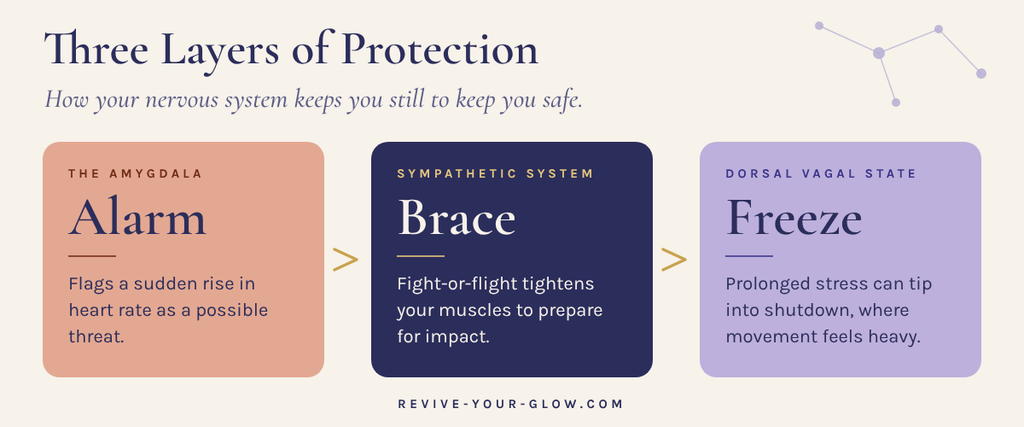
- The Amygdala: Your brain’s alarm system. It detects rapid physical exertion (like a sudden spike in heart rate) and mistakenly flags it as an oncoming panic state or threat.
- The Sympathetic Nervous System (SNS): Responsible for the fight-or-flight response, it causes your muscles to structurally “brace” or tighten to prepare for impact.
- The Dorsal Vagal State: If the stress is prolonged, the parasympathetic nervous system can overcompensate, plunging you into a “freeze” or shutdown state where movement feels physically heavy, heavy, or impossible.
When the body has been exposed to prolonged stress, burnout, or trauma, the nervous system can remain oriented toward protection rather than performance. Research from the National Institute of Mental Health explains that traumatic stress activates the body’s fight‑or‑flight response, and for some people, this state of heightened alertness can persist even after the threat has passed, affecting both physical regulation and the sense of safety in the body. In these conditions, movement, exertion, or even internal sensation may feel unpredictable or unsafe, not because something is “wrong,” but because the nervous system is still prioritizing survival over mobility.
Clinically, this ongoing state of alertness is often described as hyperarousal, where the sympathetic nervous system stays activated longer than intended. According to Cleveland Clinic, hyperarousal can include muscle tension, exaggerated startle response, disrupted sleep, and a constant feeling of being “on edge,” even when no immediate danger is present making rest and movement harder to tolerate.
When you understand that these responses are rooted in protection not failure, it becomes easier to release self‑blame and see your body for what it truly is: adaptive, intelligent, and doing its best to keep you safe.
💛 Gentle Medical Disclaimer
This article is intended for education, reflection, and support, not as medical advice or a substitute for professional care. Every nervous system is different, and healing unfolds on its own timeline.
🌱 When to Get Extra Support
If your body consistently feels unsafe, especially with ongoing sleep disruption, panic, shutdown, or fear around movement, it may help to seek support from a licensed healthcare or mental‑health professional. Reaching out isn’t a setback; it’s often an important step in helping your nervous system feel safe enough to heal. Support isn’t a failure; it’s often a key part of restoring nervous system safety.
You’re Not Broken—You’re Guarded
I had to learn this myself the slow way: when my body hesitated, it wasn’t betraying me, it was protecting me. After everything it had carried, pushing harder didn’t feel brave; it felt dangerous. So, if movement feels loaded, fragile, or frightening right now, it doesn’t mean you’re weak or failing at recovery. It means your body remembers what it took to survive, and it’s asking for reassurance before it asks for effort.
The Bridge to Your “Restart”
Most people try to jump straight from “crisis” to “action”:
- “I’ll walk 10,000 steps starting Monday.”
- “I’m hitting the gym three times a week.”
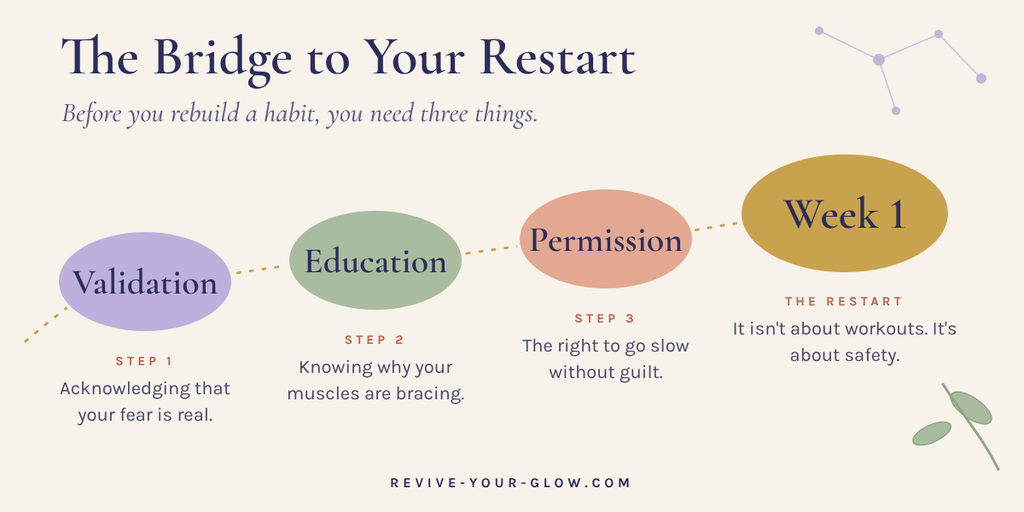
But without establishing nervous system safety first, these plans can be hard to maintain. This understanding is the missing link in your wellness reset. Before you rebuild a habit, you need:
- Validation: Acknowledging that your fear is real.
- Education: Knowing why your muscles are bracing.
- Permission: The right to go slow without guilt.
For example, if your body has been stuck in a protective freeze for months, “movement” might start with something as simple as sitting on the edge of your bed and taking one slow breath while feeling your feet on the floor. That’s it. No stretching, no reps, no goals just reminding your nervous system that you’re here, you’re safe, and nothing is being demanded of you.
Once you stop blaming yourself, you can start listening to your body with compassion instead of frustration.
What This Means for Your “Week 1”
In my approach to lifestyle reset, Week 1 isn’t about workouts. It’s not about reps, steps, or sweat. It is about:
- Re-establishing internal safety.
- Decoding your body’s signals.
- Reducing the shame of “starting over.”
- Creating the emotional readiness required for physical change.
Example:
In Week 1, this might look like choosing one tiny action each day that helps your body feel just 1% safer. Maybe it’s rolling your shoulders once before you open your laptop, standing up for 30 seconds between tasks, or walking to the mailbox instead of pushing yourself into a full workout. These micro‑moments are not about fitness they’re about re‑establishing a sense of internal safety so your body can eventually welcome more movement.
3 Low-Stimulus Movements for Somatic Safety
If you want to practice building this foundation, skip traditional fitness routines in Week 1 and try these structured exercises instead:
- Orienting: Sit quietly and slowly let your eyes scan the room, looking for five distinct things that bring a sense of calm or neutrality. This visually tells your amygdala that your current environment is secure.
- Body Scan with Foot Grounding: Sit on the edge of a chair or bed, place both feet flat on the floor, and gently press down. Notice the physical sensation of the solid ground completely supporting your weight.
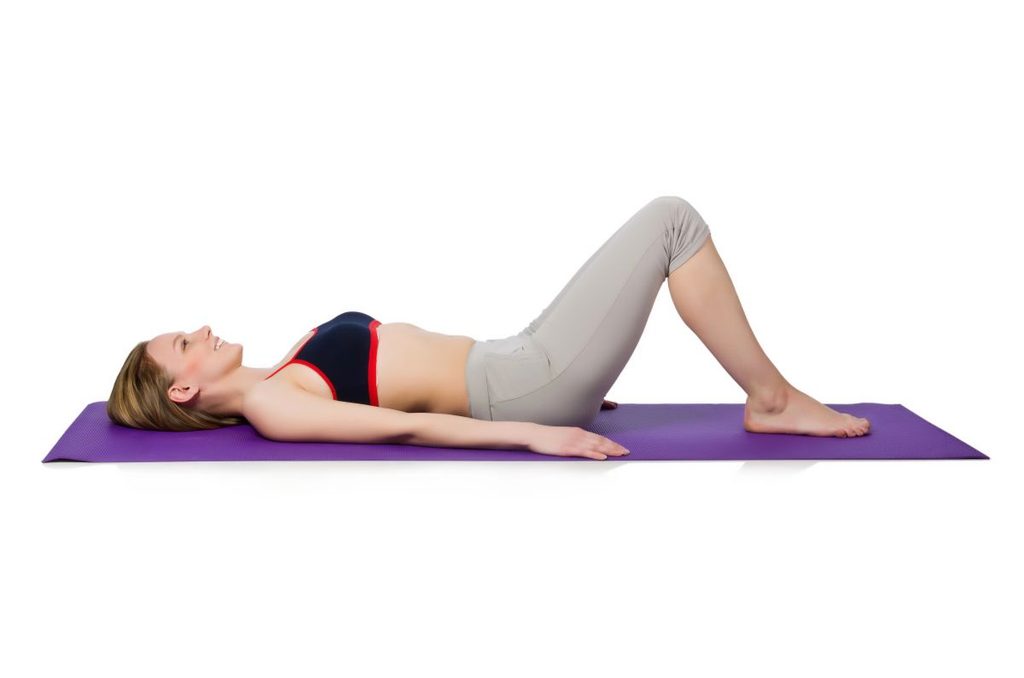
- Constructive Rest Position: Lie on your back on a comfortable mat or rug with your knees bent and feet flat on the floor, letting your lower back settle. Spend two minutes just observing your body’s rhythm without trying to change it.
These micro-movements are the foundation. It’s what makes the next step—and every step after—sustainable.
A Gentle Reframe
If movement feels hard right now, you haven’t “fallen off.” You aren’t lazy. You are simply a human being whose body has been protecting them for a very long time.
Slowly, intentionally, and gently, you are learning how to feel safe again. That is the real beginning of your journey.
Three things to carry with you
- Your hesitation is information, not a verdict.
- Safety comes first. Strength follows at its own pace.
- Going slowly isn’t falling behind. It’s how trust gets rebuilt.
If you only do one thing this week, choose a single micro-movement from the list above and repeat it for a few days. Let it be boring. Boring is safe, and safe is the point.
Where to go next: If a rising heart rate is what sets off the alarm, read why a workout can trigger panic symptoms even when you feel fine. If rest itself feels hard, Sleep and the Nervous System is a gentle place to continue.
I’d love to hear how Week 1 goes for you. Share it in the comments.



There is no shame or guilt feeling in reconditioning yourself after a traumatic experience one step at a time ’till you pick up all the pieces and be whole again.You will regain back your confidence to master yourself in time.Be patient and appreciate the baby steps you make everyday.Have faith and put your trust in Him,the Master Healer.
I really appreciate this reminder. Healing is definitely a journey, and I’m learning to honor the small steps and trust the process. Thank you for the encouragement.