


In today’s world, wellness advice is everywhere — eat better, sleep more, move your body, manage stress. And yet, so many people still feel overwhelmed, exhausted, anxious, or disconnected from themselves. The missing piece is often not what we’re doing, but the state of our nervous system while we’re doing it.
Neurowellness is the foundation beneath every wellness practice. It’s the difference between forcing healthy habits and feeling supported enough to sustain them. When your nervous system feels safe, regulated, and resilient, your body can finally shift out of survival mode and into a state where healing, clarity, and balance are possible.
Before diving into the pillars of nervous system health, you can explore my wellness reset story, where I share the moment that sparked my commitment to rebuilding my glow from the inside out.
This guide is designed to be your central resource for understanding neurowellness — what it is, why it matters, and how to support your nervous system in a realistic, human, sustainable way.
Your Guide Overview
What Is Neurowellness?
Neurowellness is the practice of caring for your brain and nervous system so your entire body can function with greater calm, clarity, and resilience.
It blends:
- Neuroscience
- Emotional regulation
- Somatic (body‑based) awareness
- Lifestyle rhythms
- Mind–body practices
Rather than focusing on productivity or optimization, neurowellness asks a gentler but far more powerful question:
How can we help the nervous system feel safe enough for life to feel sustainable?
Neurowellness isn’t about perfection. It’s about creating internal conditions that allow your body and mind to respond to life instead of constantly reacting to it.

Why Neurowellness Matters More Than Ever
Your nervous system is the command center for nearly everything you experience, including:
- Stress response
- Emotional regulation
- Sleep quality
- Digestion and gut health
- Hormonal balance
- Immune function
- Focus, memory, and mental clarity
- Energy levels and motivation
- Your ability to feel grounded, present, and connected
When your nervous system is dysregulated, even healthy habits can feel hard to maintain. You may notice symptoms like:
- Chronic stress or anxiety
- Irritability or emotional overwhelm
- Fatigue that doesn’t resolve with rest
- Brain fog or difficulty concentrating
- Digestive issues
- Trouble sleeping or staying asleep
- Feeling “on edge” or shut down
The American Psychological Association notes that chronic stress can disrupt communication between the immune system and the body’s stress-response system, contributing to problems with digestion, sleep, and long-term health.
Neurowellness helps you move out of survival mode and into a state where your body can restore, regulate, and thrive. After attending the Biohackers World Conference & Expo in New York, I came away convinced that this shift is the real starting point for wellness — not another practice to add on top of everything else.
If you’re beginning to explore how nervous system regulation shapes long-term cognitive resilience, our Essential Guide to Brain Longevity offers a deeper look at the science behind aging well and staying mentally clear for decades.
The Hidden Cost of Living in Survival Mode
Most people don’t realize they’re living with a chronically activated sympathetic nervous system. It doesn’t always look like panic or chaos — sometimes it looks like productivity, perfectionism, overthinking, emotional numbness, or constantly powering through.
One common way nervous system dysregulation shows up physically is through fear of movement after trauma or burnout, which can quietly limit recovery if left unaddressed.
When the body stays in fight‑or‑flight for too long, it begins to affect:
- digestion and gut health
- hormonal balance
- sleep cycles
- emotional stability
- cognitive clarity
- immune resilience
Neurowellness helps you shift out of this chronic activation and into a state where your body can repair, regulate, and reconnect.
Why Safety Is the Real Foundation of Wellness
A regulated nervous system is not just calm — it’s safe. Safety is the biological signal that allows your brain to soften, your breath to deepen, your digestion to activate, and your emotional capacity to expand.
This is why practices like slow breathing, grounding, gentle movement, and somatic awareness are so powerful. They send cues of safety to the body, which then communicates safety back to the brain. Over time, these micro‑signals reshape your baseline through neuroplasticity.
The Role of Somatic Awareness
Somatic awareness is one of the most underrated skills in wellness. It’s the ability to notice early signs of dysregulation — tight shoulders, shallow breathing, irritability, racing thoughts, or emotional shutdown before they escalate.
When you can identify these cues early, you can regulate early. This prevents stress from accumulating in the body and reduces the likelihood of burnout, emotional overwhelm, or chronic tension patterns.
Gentle Rhythms That Support Neurowellness
Your nervous system thrives on predictability. You don’t need rigid routines — you need rhythms. Supportive rhythms include:
- morning light exposure
- consistent meal times
- intentional transitions between tasks
- screen boundaries
- evening wind‑down rituals
These rhythms act as anchors, helping your body feel grounded throughout the day. You can also support your nervous system by creating a simple morning glow ritual that grounds your energy before the day begins.
The Science Behind Neurowellness
Neurowellness is rooted in well‑established neurological and physiological systems.
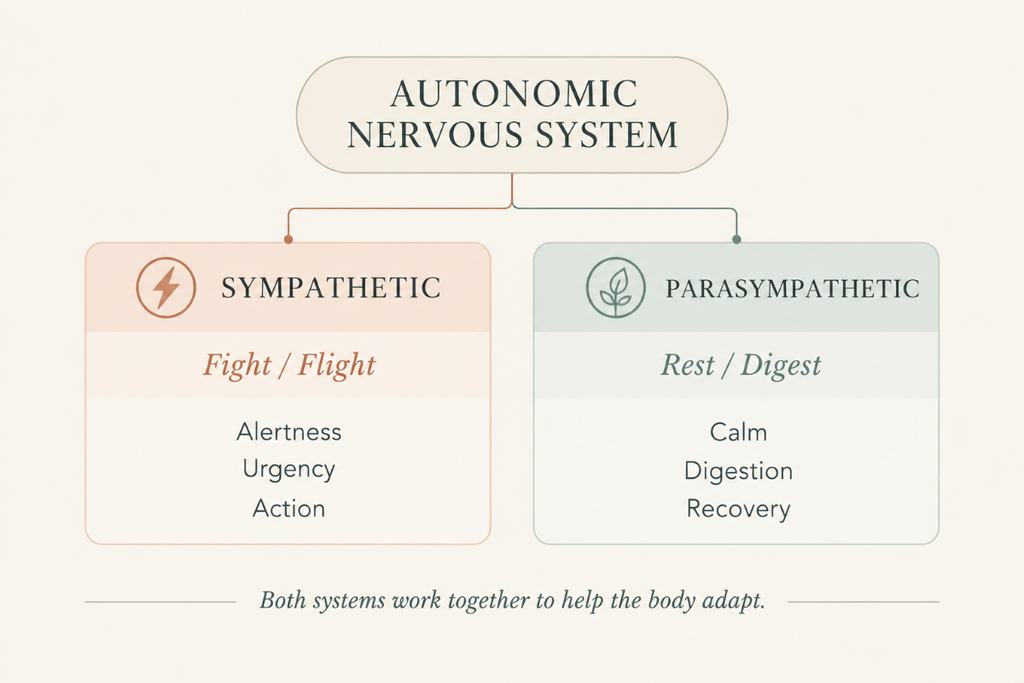
1. The Autonomic Nervous System (ANS)
Your autonomic nervous system has two primary branches:
- Sympathetic nervous system
Fight, flight, urgency, alertness - Parasympathetic nervous system
Rest, digest, repair, restore
Modern life keeps many people stuck in a chronically activated sympathetic state. Neurowellness practices are designed to gently guide the body back toward parasympathetic balance, where healing can occur.
2. Neuroplasticity: Your Brain Can Change
Your brain is not fixed. Through a process called neuroplasticity, it continuously rewires itself based on:
- Repeated thoughts
- Emotional patterns
- Sensory input
- Daily habits
- Environmental cues
This means nervous system regulation is learnable. With consistent support, your baseline stress response can shift over time. Harvard Health notes that consistently engaging in brain-supportive habits can help preserve and even enhance cognitive function as the brain continues to adapt throughout life. A recent review in the Global Journal of Aging & Geriatric Research shows that neurowellness is deeply connected to neuroplasticity and integrative therapies that support emotional regulation and cognitive resilience.
3. The Mind–Body Loop
Your body communicates with your brain just as much as your brain communicates with your body.
This is why:
- Breath can calm anxiety
- Posture can affect confidence
- Movement can shift mood
- Sensory input can regulate emotion
Neurowellness embraces bottom‑up regulation using the body as a pathway to mental and emotional balance.
The Core Pillars of Neurowellness
A truly resilient nervous system is supported through multiple, interconnected pillars.
1. Nervous System Regulation
These practices help your body feel safe in the present moment:
- Slow, diaphragmatic breathing
- Gentle, rhythmic movement
- Grounding exercises
- Temperature‑based sensory input (warmth, coolness)
- Coregulation through safe connection with others
This pillar forms the foundation for all other neurowellness work.
2. Emotional Resilience
Emotional resilience isn’t about suppressing feelings, it’s about building capacity to experience them without overwhelm. This includes:
- Naming emotions
- Processing stress instead of storing it in the body
- Expanding tolerance for discomfort
- Practicing self‑compassion
- Allowing rest without guilt
3. Cognitive Clarity & Brain Health
A regulated nervous system supports:
- Focus and attention
- Memory
- Mental stamina
- Reduced brain fog
- More flexible thinking
Sleep quality, hydration, nourishment, and digital boundaries all play a powerful role here.
4. Lifestyle Rhythms
Your nervous system thrives on predictability and gentle structure.
Supportive rhythms include:
- Morning light exposure
- Regular meals
- Consistent sleep and wake times
- Intentional rest
- Clear transitions between tasks
These rhythms signal safety and stability to the nervous system.
5. Somatic Awareness
Somatic awareness is the ability to notice what’s happening in your body before stress escalates.
This includes awareness of:
- Muscle tension
- Breath patterns
- Energy shifts
- Emotional cues
Early awareness allows you to regulate before overwhelm sets in. Small, consistent practices like your daily glow habits help reinforce the regulated rhythms your nervous system depends on.
Daily Neurowellness Practices (Realistic & Sustainable)

Morning Support
- Step outside for natural light
- Drink water before caffeine
- Two minutes of slow breathing
- Gentle stretching or mobility
Midday Reset
- Eat a grounding, nourishing meal
- Take a brief sensory break
- Walk or move your body
- Step away from screens
Evening Wind‑Down
- Dim lights 1–2 hours before bed
- Light journaling or reflection
- Warm shower or bath
- Screen‑free wind‑down ritual
For a fuller walkthrough, see how your nervous system shapes sleep.
Micro‑Habits (30 Seconds or Less)
- Unclench your jaw
- Drop your shoulders
- Inhale for 4, exhale for 6
- Place a hand on your heart
- Step outside for fresh air
Small inputs create powerful nervous system shifts over time.
Benefits of a Neurowellness‑Centered Life
With consistent support, people often experience:
- A calmer baseline mood
- Improved sleep quality
- Better digestion
- Reduced anxiety
- More emotional stability
- Clearer thinking
- Increased energy
- Deeper self‑connection
Neurowellness is not a quick fix, it’s a lifestyle that supports long‑term wellbeing.
How Neurowellness Supports Your Entire Wellness Journey
Neurowellness is the foundation beneath everything else:
- Healthy habits stick more easily
- Relationships feel safer and more connected
- The body heals more efficiently
- The mind feels clearer and more grounded
When the nervous system is supported, wellness stops feeling like work, it starts feeling natural.
Neurowellness isn’t about adding more to your plate. It’s about learning to move through your days from a grounded, regulated place. When your nervous system feels safe, clarity returns, resilience strengthens, and life stops feeling like something you have to push through.
With gentle, consistent support, your baseline begins to shift. Habits feel easier. Emotions feel more manageable. Your body feels like a place you can come home to again.
Start where you are. Your nervous system will meet you there.
Frequently Asked Questions
What is neurowellness?
Neurowellness is the practice of supporting your brain and nervous system so your entire body can function with greater calm, clarity, and resilience. It blends neuroscience, emotional regulation, somatic awareness, and lifestyle rhythms.
How do I know if my nervous system is dysregulated?
Common signs include chronic stress, irritability, emotional overwhelm, digestive issues, sleep problems, fatigue, brain fog, and feeling “on edge” or shut down.
What are the best daily practices for neurowellness?
Slow breathing, grounding exercises, gentle movement, sensory resets, morning light exposure, consistent meal times, and screen boundaries all support nervous system regulation.
Can neurowellness help with anxiety?
Yes. Many neurowellness practices activate the parasympathetic nervous system, which reduces physiological anxiety responses and helps the body return to a calmer baseline.
Is neurowellness the same as stress management?
Not exactly. Stress management focuses on coping with stress. Neurowellness focuses on strengthening the nervous system, so stress impacts you less in the first place.
How long does it take to regulate the nervous system?
Micro‑shifts can happen immediately, while long‑term changes occur through consistent daily inputs. Thanks to neuroplasticity, your baseline can improve over time.