

In April 2023, I was playing basketball, something I’d done hundreds of times before. Mid-game, everything went dark. I woke up on the gym floor as paramedics worked to bring me back. I was 52.
By the next day, I was in surgery, receiving an Automatic Implantable Cardioverter-Defibrillator, a small device now permanently in my chest to keep my heart from stopping again. It’s not something you plan for in your early 50s. But it changed how I think about health, permanently.
So, when my wife Joanne and I walked the floor at Biohackers World Conference and Expo in New York on June 27 and 28, 2026, I wasn’t there to find the next supplement stack or biomarker to chase. I was there to see if the science agreed with what my own body had already taught me. It did.
This is what I saw at Biohackers World, and why it changed how I think about aging well.
Explore Sections
Disclosure: This article contains affiliate links, including to &Mind. If you make a purchase through them, Revive Your Glow may earn a commission at no extra cost to you. We only feature products we’ve personally tested.
My Wake-Up Call: Surviving Cardiac Arrest at 52
Sudden cardiac arrest isn’t a heart attack. A heart attack is a blockage, a plumbing problem. Cardiac arrest is electrical. The heart’s rhythm short-circuits, and it stops pumping blood altogether. There’s often no chest pain and no warning sign.
I was 52, mid-game on a basketball court I’d played on countless times. One moment I was fine. The next, I wasn’t there. I came to on the gym floor, paramedics working to bring me back.
Most people who go into cardiac arrest outside a hospital don’t get a second chance. I did, because help reached me fast enough.
The next day, I was in surgery for an Automatic Implantable Cardioverter-Defibrillator, a device that watches my heart’s rhythm and steps in if it ever fails again. It wasn’t a decision I expected to make in my early 50s.
Living with it means living with a quiet kind of awareness. I don’t think about it every hour, but it’s always there, a running reminder that my heart’s rhythm isn’t something to take for granted.
That awareness changed how I trained and recovered. I stopped pushing for the sake of pushing. I check in with my body first and let the effort follow what it tells me.
It’s also why I felt at home at Biohackers World. The people there weren’t chasing extremes. They were building systems that work with the body’s signals instead of overriding them. I’d already had years of practice doing exactly that.
I’m not writing this as a clinician. I’m writing it as someone whose heart stopped once, is still beating, and has spent the years since learning to trust what your body has been trying to tell you. That’s the seat I bring to this conversation.

Inside Biohackers World: What I Saw as a Founder, Not Just an Attendee
Joanne and I spent both days on the expo floor, not the VIP lounge, though our Practitioner’s Passes gave us lounge access too. We sat in sessions, talked to founders at their booths, and asked the kind of questions I ask when I’m evaluating something for Revive Your Glow, not just for myself.
That distinction matters. An attendee collects information. A founder is looking for patterns worth building content and business decisions around.
And a pattern showed up fast. Across specialties that had nothing to do with each other on paper, the language kept converging on the same idea: regulation before performance.
- Dr. Nathan Bryan, whose work centers on nitric oxide and vascular biology, framed healthy aging around supporting the body’s own signaling pathways, not overriding them.
- Dr. Mark Atkinson’s Conscious Biohacking Masterclass tied human optimization directly to nervous-system regulation and purpose, not output.
- Dr. John-Paul Andersen, speaking with us about &mind products from andmind.com, added another lens on cognitive clarity, energy, and recovery through support for the body’s own regulation systems.
- Patrick K. Porter, PhD, founder of BrainTap, built his keynote around recovery as the real driver of human potential, not another layer of performance pressure.
- Dr. Edward Park of Recharge Biomedical talked about longevity medicine shifting upstream, toward prevention, before dysfunction sets in.
None of these people were in the same room by design. But five different specialties, five different credentials, and one consistent thread: the body’s own regulation systems are the foundation everything else builds on.
That’s not what I expected walking in. I expected more talk about pushing limits. Instead, I kept hearing evidence for why pushing harder isn’t always the path to better health.
Holistic Health and Biohacking Are Finally Speaking the Same Language
Walking that expo floor blurred a line I used to think was firm. On one side, holistic health. On the other, biohacking. I’d always treated them as different audiences with different values.
They’re not as far apart as they look.
A Shared Goal — Optimizing Human Potential
Holistic health and biohacking are chasing the same outcome: a body and mind that work well, for as long as possible.
They just start from different places. Holistic health builds through balance, nutrition, movement, rest, relationships. Biohacking builds through data, tracking numbers, testing changes, adjusting based on what the body reports back.
Different starting points. Same destination. What became increasingly clear is how stress can shape the way your body responds to everyday life, regardless of whether you call it holistic health or biohacking.
Where They Diverge on Longevity Markers
Holistic health tends to measure success in how you feel, day to day, over months and years. Energy. Mood. Resilience under stress.
Biohacking tends to measure success in specific numbers, HRV, VO2 max, glucose response, inflammatory markers.
Neither view is complete by itself. Feeling good doesn’t guarantee your biomarkers are trending the right way. Improving one marker in isolation doesn’t guarantee you’ll feel better.
Put together, they cover each other’s blind spots. That combination is what builds a real strategy for extending healthspan and lifespan, not just one or the other.
Six Principles Bridging the Two
Underneath the different vocabulary, both camps are working from the same core principles:
- Longevity Focus — the goal isn’t a shorter-term result; it’s more healthy years.
- Mind-Body-Spirit Connection — physical health, mental health, and sense of purpose move together, not separately.
- Personalized Approach — what works depends on the individual body, not a generic protocol.
- Preventative Focus — addressing risk before it becomes a diagnosis, not after.
- Lifestyle Optimization — small, consistent daily choices outperform occasional extreme effort.
- Self-Responsibility — no practitioner, device, or supplement replaces the choices a person makes every day.
These six principles are the common ground. Everything I saw at Biohackers World, and everything in the rest of this article, builds on them.
Lifestyle optimization isn’t about dramatic interventions. More often, it’s about the small daily habits that create lasting energy over time.
As I reflected on the conversations, keynotes, and technologies we encountered at Biohackers World, those shared principles seemed to organize themselves into three larger themes. Regardless of specialty, product category, or scientific discipline, the message kept returning to the same pillars: regulation over relentless performance, vitality as a whole-body practice rather than a collection of isolated systems, and accessibility over elitism.
Together, these three pillars offer a more human approach to longevity science, one centered less on optimization for its own sake and more on building a life the body can sustain for decades.
Pillar One — From Performance to Regulation
That idea showed up repeatedly at Biohackers World. In our conversation with Dr. John-Paul Andersen, the discussion around &mind products reflected the same principle: support the systems that regulate energy and recovery first, and performance becomes a byproduct rather than the objective.
The Old Model: Push, Track, Optimize
For years, biohacking got sold as a performance sport. Push harder. Track more numbers. Optimize every input until the output improves.
That model works, until it doesn’t. Chasing performance without recovery just moves the body from one form of stress to another.
What I saw at Biohackers World was a quiet correction. The conversation is shifting from “how much can you push” to “how well can you regulate.” That single shift changes everything downstream, starting with the basics.
Nutrition as Regulation, Not Restriction
Nutrition gets framed as a numbers game: calories in, calories out, macros hit or missed. That framing misses what food actually does for a body trying to regulate itself.
Blood sugar stability affects mood, energy, and sleep quality, three things that determine whether the rest of your routine even has a chance to work. Steady meals, adequate protein, and minimal processed sugar aren’t restriction. They’re inputs that keep your nervous system out of a reactive state.
Eating this way isn’t about willpower. It’s about giving your body fewer reasons to swing between spikes and crashes.
Strength Training for Longevity, Not Aesthetics
Muscle isn’t just about how a body looks. It’s functional tissue that determines how independently you move for the rest of your life.
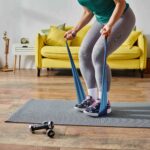
Muscle mass declines starting around age 30, and that decline accelerates enough over time to affect balance, mobility, and fall risk in older adults. Resistance training two to four times a week is one of the few interventions that reliably slows that decline.
I hold onto this one personally. With an AICD in my chest, I train with intention, not ego. Controlled resistance work, done consistently, has done more for how I feel day to day than any high-intensity phase I’ve gone through, reinforcing the value of building an active aging lifestyle one choice at a time.
Cardiovascular Training Your Nervous System Can Actually Recover From
Cardio has its own version of the push-harder trap: more miles, more intensity, more sweat equals more progress.
Lower-intensity aerobic training, often called Zone 2, works differently. It’s an effort level where you can still hold a conversation, and it trains the aerobic system without piling on recovery debt. Researchers are still working out exactly how much of Zone 2’s reputation is earned versus overstated, but the practical takeaway holds up: cardio that doesn’t wreck your recovery is cardio you can actually sustain for decades.
The conversation is shifting from ‘how much can you push’ to ‘how well can you regulate,’ emphasizing the importance of creating calm before chasing performance.
Sustainable beats maximal, especially once longevity is the goal instead of a race result.
Flexibility and Mobility — Longevity’s Most Overlooked Multiplier
Strength and cardio get the attention. Mobility gets ignored until it’s the thing standing between you and picking something up off the floor without thinking about it.
Joint range of motion and tissue flexibility directly affect how safely you move through daily life, not just how deep your stretch looks. Ten minutes of dedicated mobility work most days protects the strength and cardio gains you’re already building.
Skip mobility work, and the other two pillars have a shorter shelf life. After all, there is a strong connection between movement and a healthy glow.
Integrating These Into a Biohacking Routine Without Burning Out
None of this works in isolation, and none of it needs to happen every single day at full intensity.
A sustainable week might look like strength training three days, Zone 2 cardio two or three days, and mobility work woven in daily, five or ten minutes at a time. The nervous system underneath all of it is trainable too. Heart rate variability is one of the clearest windows we have into how well that regulation system is functioning, and it responds to exactly this kind of consistent, moderate effort.
The goal was never to do more. It was to build a routine your body can actually recover from, week after week, for years, much like the daily habits shared by people who seem to age well without chasing perfection.

Pillar Two — Skin and Vitality Are the Same Conversation Now
Skin used to sit in its own category. Something you treated with serums and sunscreen, separate from the rest of your health. That line is disappearing.
Why Skin Is a Window into Systemic Longevity
Skin is your body’s largest organ, and it reflects what’s happening underneath it. Inflammation, blood sugar swings, poor sleep, and oxidative stress often become the early signs that your body may be asking for recovery long before larger health issues appear. This perspective aligns with the latest shift toward treating skin health as part of a larger longevity strategy.
That’s why skin health kept coming up in longevity conversations at Biohackers World that had nothing to do with skincare on paper. Cellular energy, inflammation control, circulation, these are the same mechanisms driving how you age everywhere, skin included.
Treat skin as a systemic signal, not a separate category, and health becomes less about appearance and more about supporting vitality from the inside out.
What Red Light Therapy Is Actually Doing at the Cellular Level
Red light therapy isn’t a glow gimmick. It works through a mechanism called photobiomodulation, and the science behind it is specific.
Red and near-infrared light gets absorbed by cytochrome c oxidase, an enzyme inside your mitochondria’s electron transport chain. That absorption helps restore electron flow that stress and poor circulation can suppress, which increases ATP production, your cell’s usable energy currency.
More usable cellular energy means better repair capacity, wherever that repair is needed, skin included. That’s why the same light exposure that supports skin appearance also shows up in research on muscle recovery, wound healing, and even cognitive support.
I tried this firsthand on the expo floor. It’s one of the few devices I walked away from convinced it does something at the cellular level, not just the surface.
Vibration Platforms and the Circulation-Recovery Connection
Vibration platforms work on a different mechanism, but the same underlying goal: better circulation, better recovery.
Standing on a vibrating platform triggers rapid, reflexive muscle contractions your body can’t fully control. Those contractions function like a pump, moving blood and lymphatic fluid through tissue that would otherwise stay sedentary.
Your lymphatic system has no pump of its own. It depends entirely on muscle movement to move fluid through the body. A few minutes on a vibration platform gives that system exactly the kind of movement it needs, without asking for a full workout’s worth of effort.
For anyone managing fatigue, tightness, or recovery demands, that’s a meaningful input for very little time invested.
Pillar Three — Accessibility Over Elitism
The best science in the world doesn’t help anyone if it stays locked behind jargon, price tags, and gatekeeping. That was the clearest impression I walked away with.
Taking the Intimidation Out of the Science
Longevity science can sound like a foreign language: biomarkers, protocols, optimization stacks. For most people, that complexity is a wall, not an invitation.
This isn’t a minor communication problem. Roughly a third of American adults have limited health literacy, and that gap directly reduces how often people engage with preventive care in the first place. When the information itself is the barrier, no amount of good science on the other side of it matters.
What stood out at Biohackers World were the booths and speakers who translated their science into plain language, without stripping out the substance. That’s the version of this field that actually reaches people.
Community and Social Connection as a Longevity Input
Every conversation about biomarkers and protocols can obscure a simpler fact: your relationships are a longevity input too.
Public health researchers now treat social connection as a measurable factor in physical and mental health outcomes, not just a nice-to-have. People with strong relationships tend to make better health choices and recover better from setbacks, in part because they have support systems that catch them.
Joanne and I walking that expo floor together wasn’t incidental to the experience. Shared effort toward a shared goal is its own kind of longevity practice, one that doesn’t show up on any wearable.
Relief, Not Overwhelm — What Changes When Longevity Feels Human
Here’s what a room full of accessible science actually produces: relief, not more pressure to optimize.
Health information overload is a real problem, especially for people who find themselves wondering when doing everything right still leaves you feeling depleted. Research on health apps shows that too much conflicting information can push people toward anxious overuse of medical services rather than confident self-care. More data isn’t automatically more helpful if it just adds noise.
The best moments at Biohackers World took the intimidation out of the science and made it feel like a natural extension of a life already being lived well. Not one more thing to master. One more confirmation that you’re already headed the right direction.
That’s what accessibility over elitism actually looks like in practice.
The Core Takeaway: Longevity Science Is Catching Up to What Your Body Already Knew
After two days on that expo floor, one idea kept repeating across every specialty, every product, every conversation. The cutting edge of longevity science is quietly arriving at the same conclusion your body already knows: recovery, regulation, and self-trust matter more than optimization.
That message surfaced in different ways throughout the event, from Dr. Mark Atkinson’s teaching on nervous-system safety to conversations we had with Dr. John-Paul Andersen about supporting cognitive energy and recovery through regulation rather than stimulation.
I didn’t need a conference to teach me this lesson first. My own heart taught it to me on a basketball court in April 2023, the day it stopped without warning and started again because of fast intervention and a device that now lives in my chest.
Since then, every choice I’ve made about training, recovery, and daily habits has run through one filter: does this help my body regulate, or does it just add another demand on top of an already full plate?
Maybe the future of longevity isn’t about becoming more optimized. Maybe it’s about becoming more human, strong enough to move, wise enough to recover, connected enough to thrive, and present enough to enjoy the years we’re working so hard to extend.
That’s the filter Biohackers World validated, session after session, speaker after speaker. Not that I need to push harder to age well. That I need to keep listening to what my body has been telling me since the day it nearly stopped for good.
After sharing my experience and observations from Biohackers World, a few practical questions naturally follow. Let’s tackle some of the most common ones.
Frequently Asked Questions About Holistic Biohacking
Is biohacking safe if you have a heart condition or implanted device?
It depends on the specific practice and the specific device, so this isn’t a blanket yes or no. Some tools, like certain electromagnetic devices, may need extra caution around an implanted cardiac device such as a pacemaker or AICD.
I speak from experience here, not just research. Every protocol I try gets run past my cardiologist first, and I’d recommend the same for anyone managing a heart condition. Regulation-focused biohacking, done with medical clearance, tends to be lower-risk than performance-focused protocols, but “lower-risk” still isn’t the same as “no risk.” Talk to your doctor before adding anything new.
What’s the actual difference between biohacking and holistic health?
Holistic health builds toward long-term wellness through balance: nutrition, movement, rest, relationships. Biohacking builds through data: tracking specific markers, testing changes, adjusting based on what the numbers show.
Neither approach is completely alone. Together, they cover each other’s blind spots and form a more complete strategy for extending healthspan and lifespan.
Where do I start if biohacking feels overwhelming?
Start with the basics your body already knows what it needs: consistent sleep, real food, daily movement, and time away from screens before bed. These cost nothing and outperform almost every advanced protocol on the market.
Add one new habit at a time. Master it before layering on the next. Overwhelm usually comes from trying to change everything at once, not from the science itself.
Do you need expensive devices to start biohacking for longevity?
No. Foundational habits, sleep, nutrition, movement, sunlight, and stress regulation, drive most of the benefits, and none of them require a purchase.
Devices like red light panels or vibration platforms can accelerate specific outcomes once the foundation is in place. Think of them as accelerants, not entry requirements. Skipping the basics to jump straight to a device gets the order backward.
How does nervous system regulation affect aging?
A nervous system stuck in a stressed, reactive state keeps the body producing stress hormones and inflammatory signals that interfere with repair and recovery over time. That’s not a mood problem; it’s a biological one.
A regulated nervous system, by contrast, allows the body to move in and out of stress efficiently and spend more time in the recovery state where actual repair happens. That’s a meaningful part of why regulation, not just intensity, keeps coming up as a longevity factor.
Is red light therapy backed by science, or is it just a trend?
The underlying mechanism is real and well documented. Red and near-infrared light get absorbed by an enzyme in your cell’s mitochondria, which supports increased energy production and has been studied for decades in contexts like wound healing and muscle recovery.
Where it gets murkier is at the consumer level, where device quality, wavelength accuracy, and marketing claims vary widely. The science behind photobiomodulation is legitimate. Not every product claiming to deliver it is equally rigorous.
This article reflects personal experience and publicly available research. It isn’t medical advice and doesn’t replace care from a licensed provider. If you have a heart condition, an implanted device, or any other medical condition, talk to your doctor before starting a new health, fitness, or biohacking practice.