

By Wallen · Co-founder of Revive Your Glow · Sudden cardiac arrest survivor
In April 2023, my heart stopped in the middle of a basketball game. This is my cardiac arrest recovery story, and it’s not the one I expected to write. Surviving that sudden cardiac arrest showed me what it really takes to revive your glow. It isn’t another 30-day challenge. It’s a calmer nervous system, safer movement, and habits built to survive real life. This is my story, and if you’re rebuilding after a health scare of your own, it’s also a roadmap.
A Look Inside
The Day My Heart Stopped
I wasn’t expecting anything unusual that day. It was just another game of basketball, something I’d played countless times. I remember the rhythm of the court, the sound of the ball, the familiar burn in my lungs. Then everything went dark.
The next thing I remember isn’t a hospital room. It’s waking up on the gym floor while paramedics fought to bring me back. They revived me right there. By the time I reached the ambulance, I was conscious and breathing and trying to understand how my heart had stopped during something so ordinary.
The Hardest Decision: Choosing a Defibrillator
At the hospital, the doctors explained what had happened and what it meant for my future. Agreeing to an implanted defibrillator was one of the hardest decisions I’ve ever made. It’s not something you expect to face in your early 50s. But the doctor was clear: the device could save my life if my heart ever failed again. That truth settled in deeper than the device itself.
The next day I was in the operating room. When I woke up, recovery began. It was slow, humbling, and full of moments that forced me to rethink my habits, my priorities, and how I’d been living.
What My Cardiac Arrest Recovery Story Taught Me About Healing
Nobody told me that survival is where recovery begins. The American Heart Association’s scientific statement on cardiac arrest survivorship explains that the physical, cognitive, and emotional effects can linger for months or even years. A review of psychological distress after cardiac arrest reports that many survivors experience depression, anxiety, and post-traumatic stress, and that some develop an anxious, constant awareness of their own heart signals that can lead to avoiding activity.
What I didn’t have a name for at the time was the fear of movement that gripped me every time my heart rate climbed, a pattern known as kinesiophobia.
If you’ve ever felt your heart rate spike during exercise and sensed panic rising out of nowhere, here’s a gentle breakdown of why a workout can trigger panic symptoms even when you feel “fine” on the surface.
If that sounds familiar, you’re not weak or dramatic. Your nervous system is doing its job, just too loudly. That’s why I wrote about how to tell the difference between discomfort and danger in your body and why movement can feel unsafe after a health scare.
Stress physiology matters here too. Research from Massachusetts General Hospital, summarized by the NIH’s intramural research magazine, found that stress-related activity in the brain’s amygdala predicted later cardiovascular events, even after adjusting for other risk factors, and was linked to immune activity and arterial inflammation. This is an association, and I’m not a physician. I can’t say stress caused my arrest. But calming your nervous system is part of heart health, not a luxury.
Here is where I’d start:
Learn the foundations. My neurowellness guide explains how nervous system health, mind-body balance, and daily rhythms fit together.
Protect your sleep. Build a restorative night routine so your body can repair.
Why My Healthy Habits Kept Fading
Before April 2023, I had tried to build healthy habits more times than I can count. I’d start strong with new workouts and better food, then a few weeks later it would all fade. Life got busy, motivation dipped, and old patterns returned.
That’s incredibly common. Habits fade when we rely on motivation instead of systems, change too much at once, expect fast results, and fall back on comfort when stress hits. I wasn’t weak. I was human. It’s also why I eventually stopped chasing wellness optimization in favor of something calmer and more sustainable.
The research is reassuring. In a widely cited habit study, reaching peak automaticity took 66 days on average, ranging from 18 days to a projected 254. A single missed day had little effect, though many missed days added up, and exercise habits took about one and a half times longer than eating or drinking habits. Be patient, stay consistent, and don’t quit over one bad day.
What It Really Means to Revive Your Glow After a Health Scare
Even after the cardiac arrest, I didn’t change right away. I slipped back into old habits for a while. Then, slowly, something shifted:
- I started walking more.
- I started working out again.
- I started eating food that fuels me instead of drains me.
- I started paying attention to how I feel, not just how I look.
For the first time, it didn’t feel like a temporary health kick. It felt like a return to myself. That’s what reviving your glow means to me. It isn’t surface-level radiance. It’s the steady energy and confidence that comes when your body feels safe and supported. My rule now is simple: regulate first, optimize second. Movement fits into that too, and I explain how regular exercise supports circulation, stress relief, and glow in my fitness guide.
I didn’t want this to become another chase for a number on a scale. What I wanted was simpler: to feel steady, to be present for the people I love, and to build a life I’m proud of. My faith has carried a lot of that weight. Staying active in my church community, and preparing lessons for our adult Sunday School class, keeps me coming back to gratitude instead of urgency. This isn’t about vanity. It’s about honoring the second chance I was given.
How I Train and Recover Today
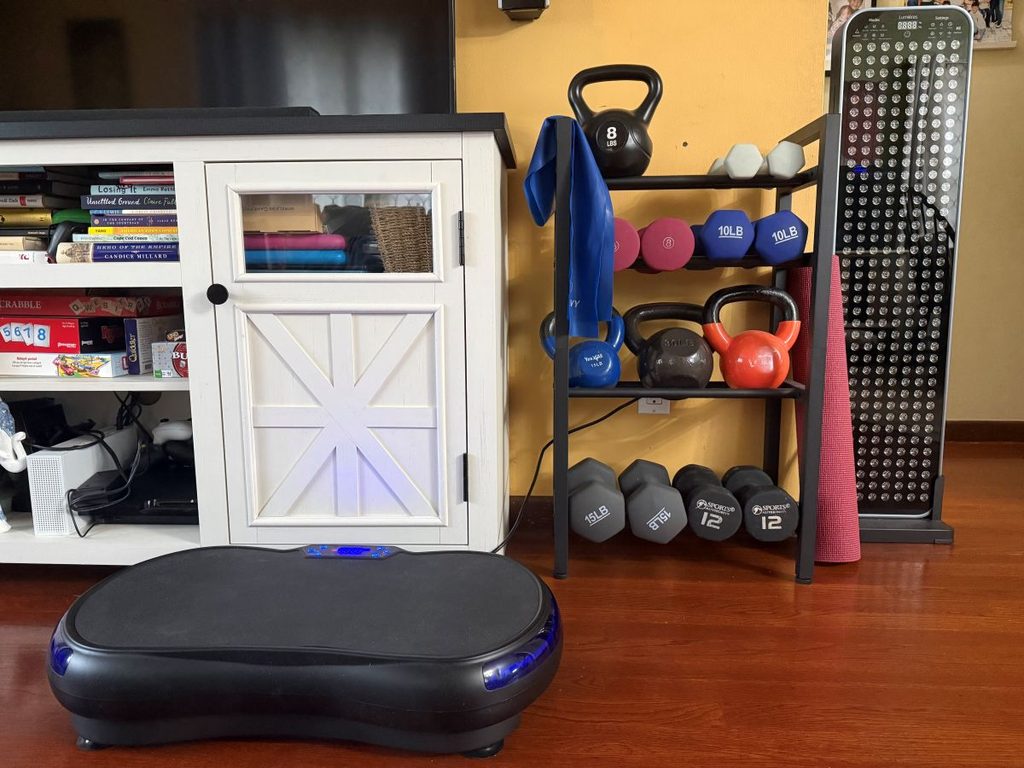
My routine is built around home strength training with dumbbells, kettlebells, and a barbell. For recovery I use a vibration platform and a light therapy device, which I found at the Biohackers World Conference in New York. I share what I learned there in my honest takeaways from Biohackers World.
Because I live with an implanted cardiac device, cardiac safety parameters shape my exercise intensity, my recovery, and my nutrition. I built a 12-week home workout and nutrition framework around those guardrails. Your limits will be different from mine, so talk to your cardiologist or device clinic before changing how you exercise.
Start Your Own Reset: 5 Steps for This Week
- Get clearance. Ask your care team about safe activity, heart-rate targets, device considerations, and cardiac rehab.
- Choose one anchor habit. Tie a daily 10-minute walk to something you already do, like your morning coffee.
- Track how you feel. Energy, sleep, and calm count as much as pounds and reps.
- Wind down on purpose. Give your nervous system a consistent evening signal that the day is over.
- Tell someone. Recovery is easier when the people who love you know what you’re building.
What This Journey Means to Me Now
When I think back to that day on the court, I don’t think about fear anymore. I think about purpose, and about the habits I’m building slowly, consistently, and imperfectly. Each one is a small promise to myself.
This isn’t just about fitness. It’s about energy and about staying strong, energized, and independent as I age. It’s about showing up for the people I love and honoring the body that fought to keep me alive.
If you’ve struggled to stick with healthy habits, I understand. I’ve lived it. Change doesn’t happen in one dramatic moment. It happens in the quiet, daily choices that build a life you’re proud of.

Have you survived a cardiac event or lived with an implanted device? Share what helped you in the comments. Please keep private medical details out of it.
“Every sunrise is an invitation to start again, stronger, wiser, and more grateful than before.”
About the Author
I’m Wallen, co-founder of Revive Your Glow with my wife, Joanne. I’m a sudden cardiac arrest survivor living with an implanted defibrillator, and I write from lived experience, not a lab coat. Faith is part of how I hold all of this together, my wife and I are active in our church community, which has shaped how I think about discipline, patience, and showing up consistently even on the hard days. You can read the full story of how Joanne and I built this brand on our About page.
FAQ
Can you exercise after a sudden cardiac arrest?
Many survivors return to physical activity, but the right type and intensity depend on your diagnosis, treatment, and device. Get clearance and a personalized plan from your cardiologist or cardiac rehab team first.
Is anxiety after cardiac arrest normal?
It’s common. Research on survivors reports high rates of depression, anxiety, and post-traumatic stress. Tell your care team, because support exists.
How long does it take to build a healthy habit?
In one widely cited study the average was 66 days, but it ranged from 18 days to a projected 254 depending on the person and the behavior.
This article shares personal experience and general education. It is not medical advice. Always consult your cardiologist or care team before changing your exercise, nutrition, or recovery routine.



“Motivation gets you going, but discipline keeps you growing.” Discipline is the key. Kaya natin yan!
Appreciate this! Discipline has been my anchor lately. We’ve got this, one steady step at a time.
Stay motivated! Sending hugs and this is very inspirational, thank you for sharing ❤️
Thank you, Joanne. Staying motivated has been a big part of my healing. I’m sending you good energy too.
Indeed, everything happens for a reason. It might have been a delayed realization of the things we neglected to do but what is important right now is not to waste the chance given to improve and give more importance on how to have a more healthy balance life because our body is a holy temple of God. ♥️
Thank you, “Ate Mae.” I agree, sometimes it takes a wake-up call to remind us to honor our bodies and live with more intention. Your message truly touched me.
So inspiring! Keep it up! You also motivated me to make healthier choices!
I appreciate your kind words, and I’m glad this spoke to you in a meaningful way. Thank you.
Everything in moderation kuya. Consistency is always the key! Enjoy life that God gave you and take care of yourself not just for you but for the people who love you. Junk food & fast food are the poison we partake so get rid of it! Stay strong & discipline. God bless!
Your words hit home, Andro. Consistency really has been the anchor for me lately (not 100% though, haha!), and I’m committed to honoring this body and the people who love me. All the best to your family.
your dedication and discipline is remarkable. I wish you good health and strength in your journey brother.
Such solid words, Dots. I appreciate the encouragement as I keep moving forward.